I saved $4,200 for a six-month trip across Southeast Asia earning $19 an hour at a hardware store in Ohio. No trust fund. No crypto miracle. No rich uncle. Just a spreadsheet I checked every Sunday night, a bank account I couldn’t touch without walking into a physical branch, and a stubborn refusal to let another year slip by saying “someday.” The trip happened. I came home with $340 and a tattoo I regret. Saving was harder than traveling — and almost nobody talks about it honestly.
I was sitting on a plastic stool in Hanoi, eating a $1.50 bowl of bun cha, when a guy from Melbourne asked how I’d funded my trip. Eleven months of overtime, every Saturday, I told him. He laughed. Said he’d put it all on a credit card and was figuring it out as he went. Six weeks later he was on a midnight bus back to Bangkok to catch an early flight home. His card was maxed. I finished my noodles. That contrast taught me more about travel than any guidebook.
Why This Matters
Money is the reason most people don’t go. Not fear, not time, not responsibilities. The number. And the number feels impossible until you break it into pieces small enough to do something about. A $6,000 trip sounds insane. Saving $165 a week for nine months sounds annoying but doable. Same trip. Different framing.
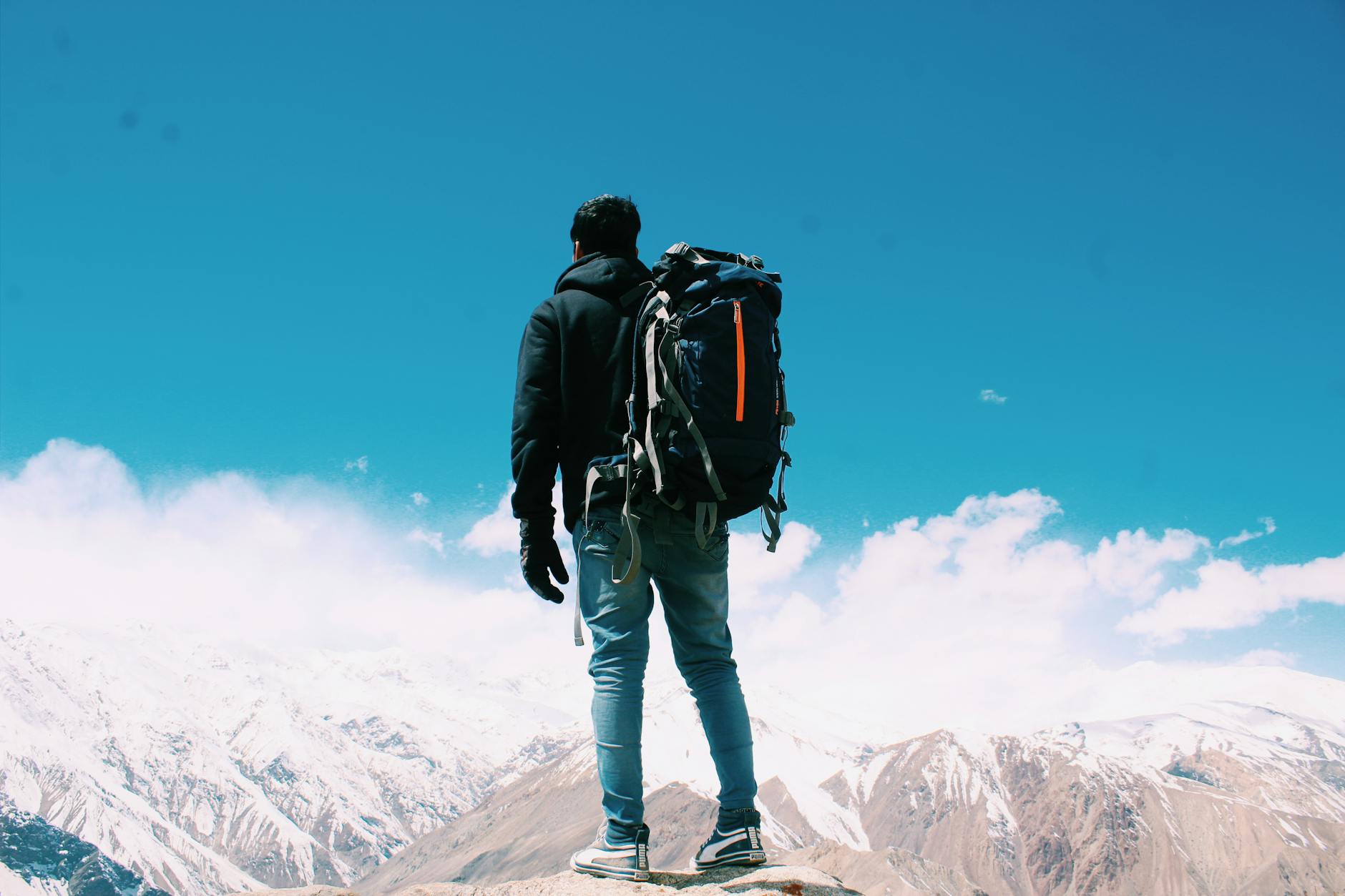
Here’s the counter-intuitive part: the cheapest travelers I’ve met are not the ones who earn the least. They’re the ones who planned the longest. Time beats income almost every time. I’ve met nurses, teachers, and delivery drivers who traveled for a year straight because they started saving eighteen months out. I’ve also met software engineers who never left because they kept waiting for a better moment.
Every dollar you save now buys a day of freedom later. That’s the whole game. You’re not saving money — you’re buying back your own time and converting it into experiences nobody can repossess. Rent goes up. Stuff breaks. But watching the sun rise over Bagan from a rented e-bike? That’s yours forever.
Top 5 Tips
1. Open a separate high-yield savings account and make it annoying to access. I used an online bank with a 4.3% APY and no debit card. To pull money out, I had to transfer it to checking, which took two business days. That delay saved me at least $600 over eleven months. Impulse purchases die when they require patience. Automate a transfer the day after every payday — even $50. You won’t miss what you never see.
2. Reverse-engineer your trip cost down to the day. Pick a rough destination and look up real daily budgets. Vietnam runs $35–45 a day if you’re smart. Portugal is closer to $70. Guatemala can be $30. Multiply by days, add a $500 flight buffer, add $400 for emergencies. My six-month Southeast Asia number came to $5,800. I saved $6,200 because I wanted slack. Know your number before you start cutting anything — vague goals get abandoned.
3. Attack your three biggest expenses, not your small ones. Skipping lattes saves maybe $80 a month. Moving to a cheaper apartment saves $300. Selling your car and biking saves $400 plus insurance. Cancelling subscriptions saves $40. The math is brutal and obvious once you see it. I moved into a room above a garage for $450 a month instead of my $850 apartment, and that single decision funded half the trip. Small cuts feel virtuous. Big cuts actually work.
4. Sell things you don’t use and don’t replace them. I made $1,900 in one month selling a guitar, a road bike, a gaming console, and about forty books on Facebook Marketplace. Nobody needs four jackets. Nobody needs a blender they’ve used twice. Be ruthless. If you haven’t touched it in a year, it’s not yours anymore — it’s a trip you haven’t taken yet.
5. Pick up a side hustle tied to your actual skills. I tutored high school math on weekday evenings for $30 an hour. Two students, four hours a week, $480 a month. That alone was $5,280 over eleven months. You don’t need to drive for a rideshare app. You need one thing you’re decent at and two people willing to pay for it. Dog walking, resume editing, weekend bartending, freelance writing — pick one and commit for six months.

Budget Breakdown
Here’s exactly what my six-month trip cost in real numbers. All in USD because that’s what I tracked in. I left in March 2019 and came back in September.
- Flights (round trip, Cleveland to Bangkok via Chicago): $740 — booked five months out on a Tuesday, no checked bag
- Accommodation (180 nights, mix of hostels and guesthouses): $2,340 — averaged $13 a night, cheaper in Vietnam, pricier on Thailand’s islands
- Food and drink: $1,980 — roughly $11 a day, mostly street food, one nice meal a week
- Transport between cities (buses, trains, one cheap flight): $610 — overnight buses saved money and hostel nights at the same time
- Activities (temples, diving course, cooking class, one elephant sanctuary): $870 — the diving certification alone was $350 and worth every cent
- Visas, insurance, SIM cards, random stuff: $420
- Emergency buffer I didn’t fully use: $400 set aside, spent $180 on a stomach bug in Laos
Total spent: $6,960. I saved $6,200 and came home with $340 after a few unexpected costs, which means I overshot my original $5,800 estimate by about $1,100. That’s real life. Always pad your number. If you’re wondering whether you can do this on less — yes. Cut the diving course, skip the islands, travel slower. I met people doing the same route on $4,500.
One Mistake to Avoid
I booked my flight four months before I had the money saved. Stupid. I found a $740 fare and panicked, thinking it would vanish, so I put the flight on a credit card and told myself I’d pay it off before the trip. I did pay it off. But for two months I was saving for a trip while also paying down debt I’d created for the trip. A pointless loop. It stressed me out the entire time.
The lesson: never let the excitement of a deal override the boring reality of your bank account. Fares go on sale constantly. There is always another $700 flight somewhere. What doesn’t come back is the momentum you lose when you’re juggling debt and savings at the same time. Book the flight last, not first. Save the money, then buy the ticket, then pack.
Are you saving for a trip right now, or just thinking about it? Those are two very different things, and only one of them ends with you eating noodles on a plastic stool in a city you can’t pronounce yet.
Eleven months of overtime and cheap rent bought me six months I’ll remember for the rest of my life. That’s the trade. It’s not glamorous. There’s no shortcut and no hack that skips the boring middle part where you’re saying no to dinners out and selling your guitar. But the middle part ends. The trip starts. And then you’re standing somewhere new, doing the math on how much you have left, realizing you’d do the whole grind again in a heartbeat. Start the spreadsheet tonight. Pick the number. Make the transfer. The world is patient, but your twenties aren’t.