I once watched a guy at Bangkok’s Don Mueang airport pay $85 in excess baggage fees for a suitcase he’d packed with things he never touched in three weeks. I was standing right behind him in line. Two years earlier, I’d made the exact same mistake. These days I travel with a single 40-litre backpack that fits under the seat in front of me. No checked bag. No waiting at the carousel. No praying my stuff made the connection in Istanbul. It took years and a lot of ruined trips to get here. Travelling carry-on only has changed how I move through the world. It’s not about being tough or minimalist for its own sake. It’s about freedom, money, and never losing your bag again.
The moment that broke me happened in Lisbon in 2019. I’d flown in from Marrakech with a 22kg suitcase, and the budget airline charged me €60 at the gate because I’d guessed wrong on the size. I got to my hostel in Alfama, dragged that thing up four flights of stairs, and realised I hadn’t opened it since I’d packed it in London. Everything inside was clean. Everything was useless. I’d carried a hair dryer across two continents. Two weeks later I gave the suitcase away to a Brazilian guy in Porto and bought a 40L backpack. I’ve never looked back.
Why This Matters
Checked bags are a tax on travellers who haven’t learned the system yet. Ryanair, Wizz, easyJet, Spirit, Frontier — they all make their real money on the bag you didn’t plan for. A €15 fare becomes a €70 fare the moment you add a checked bag. Do that across a ten-flight trip and you’ve just paid for another week of travel.
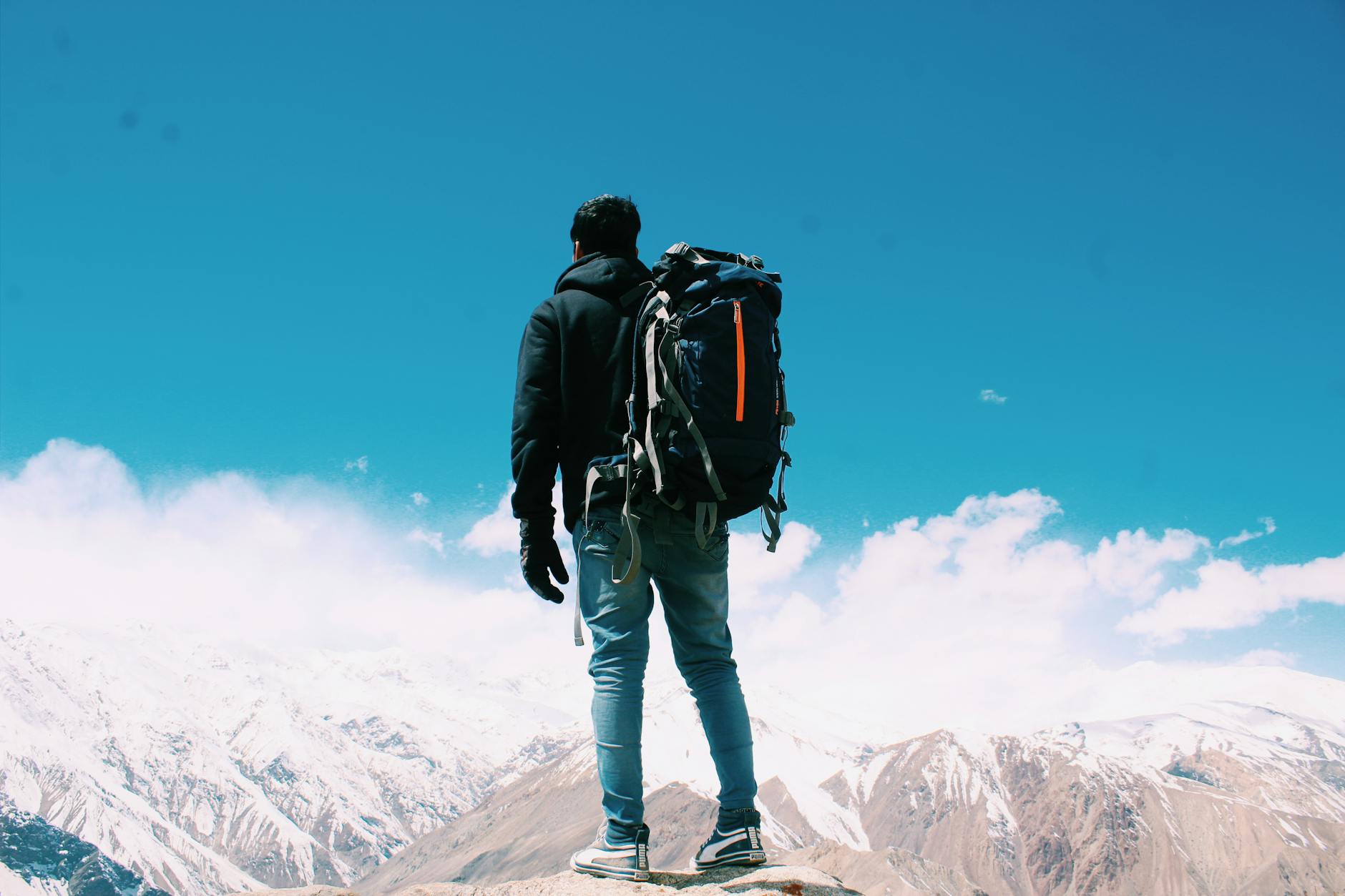
Then there’s the time cost. I’ve spent hours of my life standing at carousels in Delhi, Bogotá, and Rome, waiting for a bag that eventually showed up damaged. Once, in Tbilisi, my bag didn’t show up at all for six days. Six days of my trip gone, chasing a lost bag with a phone number that never answered. Carry-on only means you walk off the plane and you’re already gone.
Here’s the counter-intuitive bit: packing lighter doesn’t make you less prepared. It makes you more mobile. You can take the cheap bus instead of the taxi. You can walk to the hostel instead of paying for a transfer. You can change plans at 6pm and be on a night train by 9. Your bag stops being baggage and becomes just a thing on your back.
Are you still checking a bag every time you fly? If so, what’s actually in there that you need?
Top 5 Tips
1. Buy the bag before you book the flight. Most people do this backwards. They book a $40 flight, then buy a bag, then discover it doesn’t fit the airline’s sizer. Get a 40L backpack that measures under 55 x 40 x 20cm — that’s the standard Ryanair and Wizz free cabin size. I use an Osprey Farpoint 40, which cost me about $140 in 2020 and has flown over 200 times. Cheap bags break. A good one lasts a decade.
2. Pack for four days, not fourteen. You can wash underwear and t-shirts in a hostel sink in ten minutes. A small bottle of Dr. Bronner’s soap costs $4 and lasts months. Four days of clothes covers any trip length if you do laundry every third or fourth night. My full clothing list is: 4 t-shirts, 2 pairs of trousers, 4 pairs of underwear, 4 pairs of socks, 1 fleece, 1 rain shell, 1 pair of shoes worn on the plane, 1 pair of sandals. That’s it. Nobody has ever noticed I wear the same shirt twice in a week.
3. Wear your heaviest stuff on the plane. This is the oldest trick and it still works. Boots, jeans, jacket, hoodie — all on your body when you walk past the gate agent. I’ve boarded flights in 30°C heat looking like I was heading to Iceland, then stripped down in the seat. You look ridiculous for twenty minutes. You save $50 and 3kg of bag weight.
4. Kill the toiletries bag. This is where most people fail. Full-size shampoo, a hairdryer, three pairs of shoes, a “just in case” outfit — it all adds up. Buy toiletries when you land. Every city on earth sells soap and toothpaste. A 100ml refillable bottle set costs $8 and lasts years. Leave the hairdryer at home. Every hostel has one, and if it doesn’t, your hair will dry on its own.
5. Test-pack at home and walk around the block. Sounds silly. Do it anyway. Load your bag, put it on, walk 1km. If your shoulders hurt or the bag feels heavy, you’ve packed too much. I did this before my first carry-on trip to Colombia and cut 2kg before I even left the house. The weight you don’t notice at home is the weight that ruins you on day nine in the Andes.
Quick summary of what actually matters:
- Get a 40L bag that fits the strictest budget airline sizer — this is non-negotiable.
- Pack for four days, wash every third day, and stop pretending you need more.
- Wear your heaviest clothing on the plane, every single flight.
- Buy toiletries at your destination instead of flying with them.
- Test-pack and walk with the bag before you fly — you’ll cut weight you didn’t know you had.

Budget Breakdown
Here’s what carry-on travel actually costs, in US dollars, based on what I’ve paid over the last few years.
A decent 40L backpack runs $100 to $180. My Osprey was $140. A cheaper option like a Cabin Max or a generic 40L from Decathlon costs about $40 and will do the job for a year or two of hard travel.
Packing cubes are worth the money. A set of three costs $15 to $25. They compress your clothes and stop your bag from exploding every time you open it. I’ve used the same set for five years.
Refillable toiletry bottles: $8 for a set of four. Solid shampoo bars: $6 each, last about two months. A travel towel: $12. A universal adapter: $10. A small padlock: $5.
Now the savings. On a typical ten-flight trip through Europe or Southeast Asia, checked bags would cost me roughly $25 to $40 per flight, so $250 to $400 total. Carry-on only, that’s $0. Over a year of travel, that’s easily $1,000 to $2,000 I’ve kept in my pocket. That’s a month of hostels in Vietnam. That’s a flight to South America. That’s the whole point.
One more number: laundry. A hostel wash costs $3 to $6, or free if you do it by hand in the sink. Over a three-week trip, that’s maybe $20. The checked bag you didn’t pay for would have been ten times that.
One Mistake to Avoid
Don’t buy your bag the week before your trip. I did this in 2018 before a flight to Mexico City and ended up with a 45L pack that was 3cm too tall for the airline’s sizer. The gate agent measured it. I paid $75. That’s the mistake.
The deeper lesson: the airline sizer is the only measurement that matters. Not the bag’s advertised litres, not the shop assistant’s opinion, not what the internet says. The sizer at the gate. Measure your bag with a tape measure before you buy it, then measure it again when it’s packed. A bag that fits empty can bulge past the limit when full. I now pack mine so it’s got about 2cm of slack on every side. It has never been checked in five years.
Also, don’t trust the “personal item” loophole to save you. Yes, some airlines let you bring a small bag free and charge for the bigger one. Yes, you can sometimes slip past with a slightly oversized personal item. But if the flight is full, the gate agent will make you check it, and you’ll pay more than you would have at booking. I’ve watched it happen a dozen times. Plan for the strict rule, not the loophole.
If you only take one thing from this post, take this: your bag should be smaller than you think it needs to be, and you should have measured it twice before you leave the house.
Travel is better when you’re light. You move faster, you spend less, and you stop worrying about things you don’t need. The first carry-on trip feels scary. The second one feels obvious. By the tenth, you’ll wonder why you ever dragged a suitcase up a flight of stairs in Lisbon. Book the flight. Pack the small bag. Go. The world is bigger when you’re not weighed down by it.