I slept in a two-man tent on a cliff above the Adriatic for eleven nights straight last summer. Total accommodation cost: zero. The campsite charged about four euros a night, but I wild-camped most of those nights and only paid when I needed a shower and a place to charge my phone. That trip cost me less than a hostel bed in Split would have for two nights. Camping isn’t glamorous. It isn’t for everyone either. But if you want to stretch your travel budget further than you thought possible, it’s the single most powerful tool I’ve found in ten years of moving around the world on very little money.
I still remember the night in Patagonia when the wind snapped one of my tent poles clean in half. I was camped near El Chaltén, maybe 200 metres from a river, and the gusts hit 80 kilometres an hour. Two hours I spent lying flat on my sleeping mat, holding the tent fabric down with both arms, convinced the whole thing would tear apart. It didn’t. I taped the pole with duct tape the next morning, ate cold oats because my stove wouldn’t light in the wind, and hiked anyway. That tent lasted another fourteen months. The repair cost me nothing. The memory cost me nothing. The night itself cost me nothing.
Why This Matters
Accommodation is the biggest line item in almost every travel budget. Flights you can hunt down, food you can cook yourself, transport you can hitch or take the slow bus — but a bed is a bed, and hotels know it. In Western Europe, a basic hostel dorm runs 25 to 40 euros a night in high season. In Iceland or Norway, double that. Camping cuts that number to five euros, two euros, or zero. Over a three-week trip, that’s the difference between spending 600 euros on beds and spending 60.
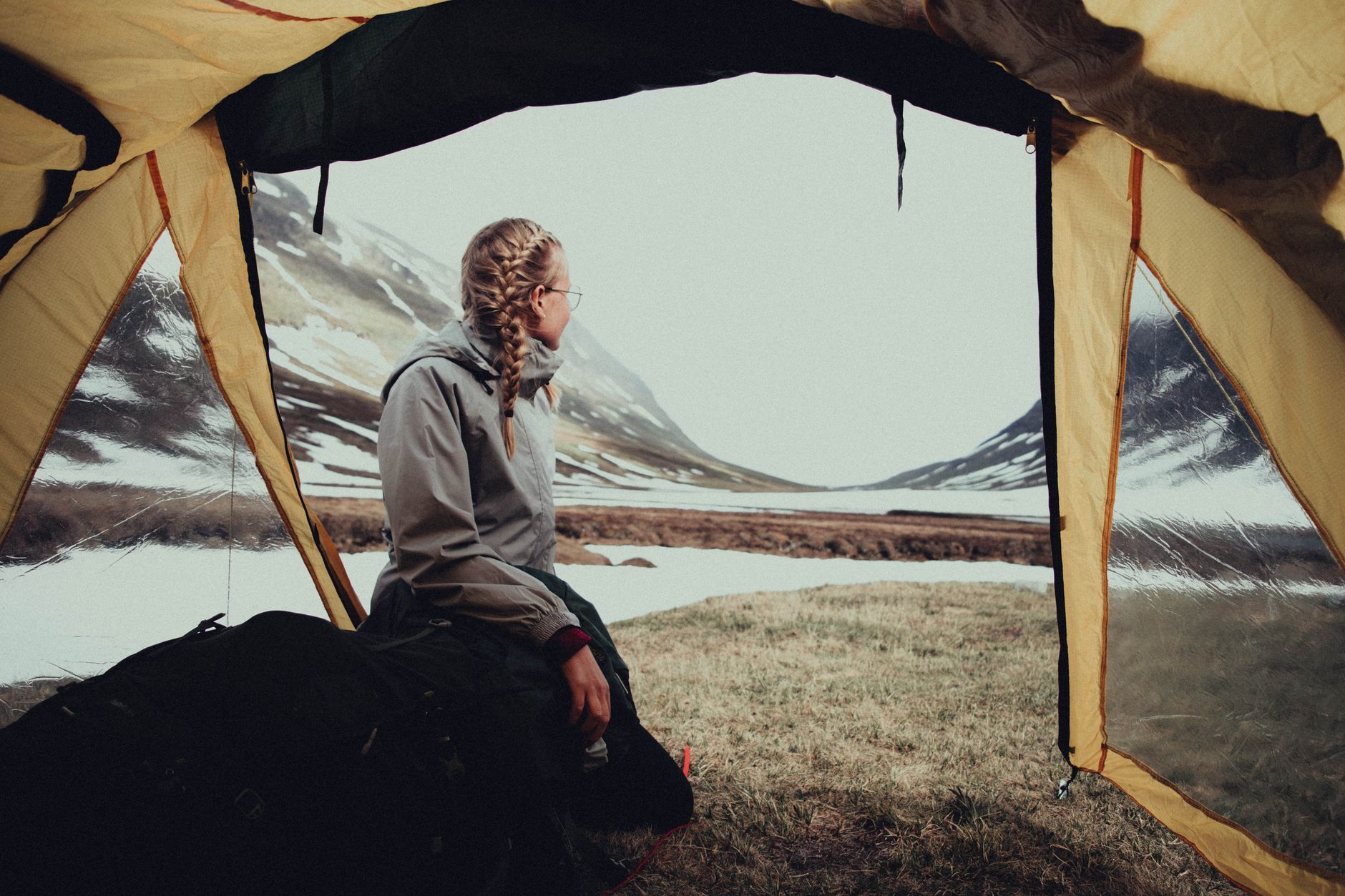
Here’s a counter-intuitive opinion that gets me into arguments: camping is not actually about saving money. It’s about buying time. Every euro you don’t spend on a bed is a euro that lets you stay on the road another day, another week, another month. I’ve met backpackers who blew their entire budget in six weeks because they refused to camp, then flew home early. I’ve met campers who stretched the same money across five months. The tent isn’t the point. The extra time is the point.
There’s a physical cost, obviously. You sleep worse. You smell worse. You carry more weight. But you also wake up in places no hostel can offer — beside rivers, on mountain ridges, in fields where the only sound is wind and animals. Have you ever watched the sun come up from inside a sleeping bag, with no one else around for miles? That’s not a hostel experience. That’s something else entirely.
Top 5 Tips
1. Buy your tent at home, not on the road. I made this mistake in New Zealand and paid 180 NZD for a cheap dome tent that leaked within a week. If you’re planning a long trip, buy a proper lightweight tent before you leave. Look for something under 2 kilograms, with a full-coverage rainfly and aluminium poles, not fibreglass. A decent one costs 150 to 250 euros and will outlast three cheap replacements. If you’re only camping for a short trip, borrow one or buy used from a gear swap group.
2. Learn the difference between campsites and wild camping. Paid campsites give you showers, toilets, electricity, sometimes a kitchen. They cost anywhere from three to thirty euros a night depending on the country. Wild camping — pitching on public land, away from towns — is free in many countries, including Scotland, Norway, Sweden, and most of New Zealand’s conservation land. But it’s illegal in others, like most of Germany and the Netherlands. Check the rules before you go. Getting woken at 2am by a ranger is not a fun way to learn.
3. Cook your own food, always. A camping stove and a pot cost maybe 40 euros total and pay for themselves in three days. I eat oats and fruit for breakfast, bread and cheese for lunch, and rice or pasta with whatever vegetables are cheap for dinner. That’s about 5 to 8 euros a day in most of Europe. Eating out three meals a day would be 30 to 50. Over a month, that’s a flight ticket saved.
4. Camp near towns, not in them. The best spots are 20 to 40 minutes’ walk from a town or bus stop. You get the free pitch, the quiet, and still have access to shops and transport. I’ve camped on the edge of villages all over Portugal and Italy this way, and nobody bothered me because I was clearly just passing through, packed up early, and left no trace.
5. Carry less than you think you need. My first long camping trip, I carried 22 kilograms. My back still remembers it. Now I carry 11. Every item earns its place. One set of clothes for hiking, one for towns, a sleeping bag rated for the coldest place I’ll go, a mat, a stove, a pot, a headlamp, a first aid kit, and a repair kit with duct tape and spare pole sections. That’s it. Everything else is dead weight.

Budget Breakdown
Here’s a real three-week camping trip through Portugal and Spain, September 2024, solo, in euros.
- Flights (return, budget airline, carry-on only): 85
- Tent (already owned, amortised over 40 trips): 5
- Campsite fees (7 paid nights at 4 to 9 euros): 42
- Wild camping nights (14 nights): 0
- Food (cooked, plus occasional cheap meal out): 165
- Transport (buses and two trains): 110
- Stove fuel and small gear replacements: 18
- Miscellaneous (entrance fees, coffee, laundry): 45
Total: 470 euros for three weeks. That’s 22 euros a day, all in. A hostel-only version of the same trip would have been closer to 900. The tent paid for itself on the second night.
Costs shift depending on where you go. Norway will run you 15 to 25 euros a day in campsite fees if you use paid sites, but wild camping is legal and free almost everywhere. Southeast Asia is different — guesthouses are so cheap that camping barely saves money, and the heat and insects make it miserable. Camping makes the most sense in Europe, New Zealand, Chile, and North America, where accommodation is expensive and wild spaces are accessible.
One Mistake to Avoid
The worst mistake I made wasn’t gear or location. It was not checking the weather. I camped on a beach in northern Spain in October, pitched my tent on what looked like dry sand about three metres from the waterline. High tide came at 3am. I woke up with water seeping through the floor, grabbed everything, and spent the rest of the night shivering under a rock with my sleeping bag wrapped around me. My phone died. My stove floated away. I never found it.
The lesson wasn’t “don’t camp on beaches.” The lesson was: check the tide tables, check the forecast, and never assume you know what the water will do. Now I check three things before every pitch — weather for the next 24 hours, tide times if I’m anywhere near water, and whether the ground drains. That last one matters more than people think. A flat spot that turns into a puddle at 2am will ruin your night faster than any storm.
Camping rewards preparation and punishes laziness. That’s actually why I love it. There’s no front desk to fix your problems. You either thought ahead or you didn’t. The tent doesn’t care about your excuses.
If you’ve never camped while travelling, start small. One night. Somewhere close. Borrow a tent, pack a bag, and see how it feels. You might hate it. Plenty of people do, and that’s fine. But you might also discover that the best nights of your trip are the ones where you paid nothing, slept badly, and woke up somewhere unforgettable. The road is longer when you camp. That’s the whole point.