Packing Light for Long Trips: The 7-Kilogram Freedom Plan That Saved My Back and My Bank Account
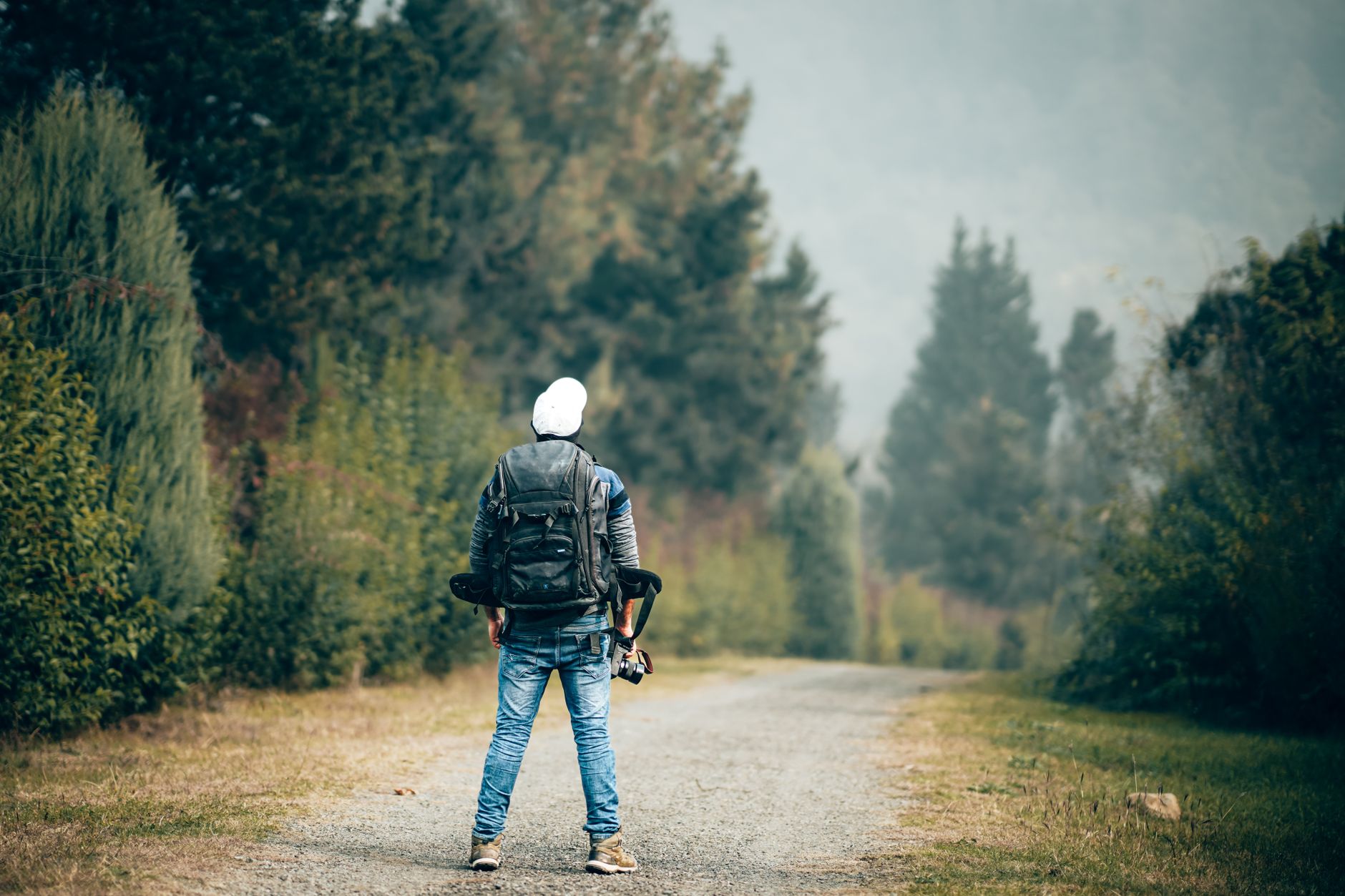
I was sitting on a curb in Hanoi, sweat dripping down my temples, watching a middle-aged Australian woman glide past with a single 30-liter pack. She looked like she was floating. I, on the other hand, had just paid a cyclo driver $3 to haul my 18-kilogram monster of a suitcase up a hill because my shoulders had given up. That was 2016, month four of what was supposed to be a year-long trip. I opened that suitcase in my hostel dorm and realized I had worn exactly four of the fifteen shirts inside. The rest were dead weight — literally and financially. Every extra kilo on a budget flight costs money. Every extra kilo on your back costs you experiences. I donated half of it to a local charity that afternoon and never looked back. Have you ever counted how many times you actually wear that “just in case” jacket?
Why This Matters
Packing light isn’t a style choice. It’s a financial strategy and a physical survival tactic rolled into one. When you travel for months, not weeks, every kilogram you carry multiplies across every bus ride, every train platform, every steep cobblestone street. Budget airlines in Asia and Europe charge $10 to $30 per checked bag, per flight. Fly ten times in six months, and that’s $300 down the drain for clothes you’re not even wearing. But it goes deeper. Heavy luggage forces you into taxis instead of walking. It makes you skip that free hostel shuttle because you can’t manage the stairs. It turns spontaneous decisions — like hopping on a night bus to a border town — into logistical nightmares. Light packing gives you options. Heavy packing steals them. In my experience, the trips where I carried less were the ones where I lived more. The math is simple: fewer possessions, more presence.
Top 5 Tips
1. **Weigh everything before you leave, then cut it by 30%.** I’m not joking. Lay every single item on your bed. Pick up each piece and ask yourself: “Would I buy this again tomorrow for the price of a decent street meal?” If the answer is no, it stays home. My rule after Hanoi? Total bag weight, including the bag itself, must stay under 7 kilograms for indefinite travel. That forces hard choices. One pair of jeans, not three. Two t-shirts, not six. You can wash clothes in a sink with hotel shampoo. It takes ten minutes. It dries overnight in most climates. The first time you do this, you’ll feel naked. By day five, you’ll feel free.
2. **Adopt the “three-layer system” and never deviate.** Base layer: one merino wool t-shirt that doesn’t stink after a week. Mid layer: one lightweight fleece or hoodie. Outer layer: one packable rain shell that doubles as a windbreaker. That’s it. Three layers for any climate from 5°C to 35°C. You add or subtract based on the day. For bottoms, one pair of quick-dry travel pants and one pair of shorts. If you’re going somewhere truly cold, buy a cheap puffer jacket at a thrift store when you land and donate it when you leave. I did this in Patagonia for $15. It worked perfectly.
3. **Wear your heaviest items on travel days.** This sounds obvious, but people ignore it. Your denim jacket, your hiking boots, your thickest hoodie — these go on your body, not in your bag. I once flew from Bangkok to Kathmandu wearing four layers in 30°C heat because I refused to pay the $25 baggage fee. People stared. I didn’t care. I saved enough money to eat momos for a week. Also, pack your bag so the heaviest stuff sits closest to your spine. That shifts the load from your shoulders to your hips, which is where real strength lives.
4. **Go digital for everything you can.** Books, notebooks, maps, paper tickets — all of it becomes weight you don’t need. I carry one e-reader with about 200 books on it. Weight: 180 grams. A single paperback weighs more than that. For documents, keep PDFs on your phone and in the cloud. For photos, back up nightly to free storage. And here’s a counter-intuitive opinion: leave the camera at home. Your phone camera is good enough for 95% of travel shots. I’ve met people carrying $2,000 DSLRs who barely used them because the weight made them tired and the fear of theft made them paranoid. The best photos I’ve taken are on a $300 budget phone.
5. **Pack for two weeks, not two months.** No matter how long your trip is, your clothing cycle should be fourteen days max. That’s because you’ll do laundry every two weeks anyway — it’s unavoidable. So pack exactly fourteen days’ worth of socks and underwear, plus two shirts and one pair of pants that can be rotated. For underwear, buy five pairs of synthetic quick-dry ones. They wash in two minutes and dry in four hours. Cotton is the enemy. It absorbs sweat, takes forever to dry, and smells like regret. Synthetic and merino are your friends. Trust me on this.
Budget Breakdown
Let’s talk real numbers. I’ve done this across 67 countries, and the savings are consistent. Here’s a breakdown from a recent six-month trip through Southeast Asia and Eastern Europe, using US dollars because that’s what I think in.
– **Baggage fees avoided:** I flew 14 times. Average checked bag fee on budget carriers: $22 per flight. That’s $308 saved. My carry-on backpack was always within the 7kg limit, so I never paid a single overweight fee.
– **Laundry costs:** Instead of paying hostel laundry services at $3 to $5 per load every three days, I hand-washed in sinks. Cost per wash: $0.50 for a tiny bottle of travel detergent. Over 180 days, washing every three days (60 washes), that’s $30 versus roughly $240. Savings: $210.
– **Taxi avoidance:** With a light bag, I walked from train stations and airports to my accommodation 80% of the time. Average short taxi ride in cities I visited: $8. That’s 144 potential rides over six months. I took about 20. Savings: roughly $992. Yes, almost a thousand dollars just by not being weighed down.
– **Flexibility gain:** This one’s harder to quantify, but real. When I could suddenly take an unplanned overnight bus because my bag was light, I saved $25 on a hostel night. Happened maybe eight times. That’s another $200.
– **Total savings:** $308 + $210 + $992 + $200 = $1,710 over six months. That’s nearly $285 per month. For me, that covered my entire food budget in Vietnam for two months.
The initial investment in quality gear stings a little. A good 30-liter backpack costs $100 to $150. Merino wool shirts run $40 each. But you buy them once and they last years. Compare that to paying $22 baggage fees on every flight for a decade. The light pack pays for itself in the first month.
One Mistake to Avoid
The mistake that nearly broke me was buying “travel-sized” versions of everything before a three-month trip through South America. I walked into a pharmacy and bought miniature shampoo bottles, travel toothpaste tubes, a compact first aid kit, a tiny sewing kit, and a micro towel. Total weight of all that nonsense: 1.2 kilograms. Total cost: $45. And you know what? Every single one of those things was available at any corner store in Lima, Buenos Aires, or Santiago for less money. I used up the shampoo in two weeks and then had to buy a full-size bottle anyway, which I then had to carry. The real lesson? You don’t need to prepare for a wilderness expedition when you’re traveling between cities with pharmacies, supermarkets, and laundromats. The world is full of soap. It has toothpaste. It sells razors. The only thing you absolutely must bring is your passport, your money, and your phone. Everything else can be bought on the road, usually cheaper and often better. I once spent $60 on a “travel towel” that was supposed to dry fast. It dried fast. It also felt like wiping myself with a sandpaper napkin. I threw it away in Colombia and bought a local cotton towel for $4. It was softer, bigger, and honestly dried just as well. Stop overthinking. Stop overpacking. The stores abroad are not empty.
Closing inspiration paragraph:
The day I lifted that 7-kilogram pack onto my shoulders in Hanoi, I felt a click in my brain. It wasn’t just my spine thanking me — it was my whole approach to life. When you carry less, you move faster. When you move faster, you see more. When you see more, you understand more about the world and your place in it. I’ve slept in train stations in India, hiked volcanoes in Guatemala, and danced at dawn in Lisbon — all with that same small bag. It never held me back. It pushed me forward. So here’s my challenge to you: pack for your next long trip as if you’re only leaving for ten days. Cut it in half again. Then feel the wind on your neck and the freedom in your stride. The road is long, but your shoulders don’t have to be. Go light. Go far. And when you come back, tell me what you saw that you would have missed with a heavier load. I promise you’ll have stories worth telling.