The smoke off the charcoal grill hit me before I even saw the stall. Chili, fish sauce, something sweet caramelizing in a blackened wok. I was three weeks into a six-month overland run through Southeast Asia, and my stomach had already staged two mutinies. I’d eaten a bowl of noodles in a bus station that I’m still convinced was trying to kill me. So when a grandmother in a plastic chair waved me toward a plate of grilled squid at a night market in Da Nang, I hesitated. The squid cost 40,000 dong. My backup plan was a plain baguette. I sat down anyway. That squid was one of the best things I’ve eaten in 67 countries.
Three days earlier I’d watched a tourist at the same market peel the skin off his grilled chicken and eat only the meat underneath. He was terrified. He also paid triple what I paid for a worse meal. That gap — between fear and good eating — is what this post is about. You don’t need a five-star stomach or a five-star budget. You need a few rules, most of which you already know but don’t follow.
Why This Matters
Street food is the cheapest way to eat well anywhere on earth. I average $4 to $8 a day on food in most of Asia, Latin America, and the Balkans, and I eat like a local king. The same money at a tourist restaurant buys me a sad plate of fries and a bottle of water with a European markup. That’s not a small difference. Over a month, it’s the cost of a bus ticket to the next country.
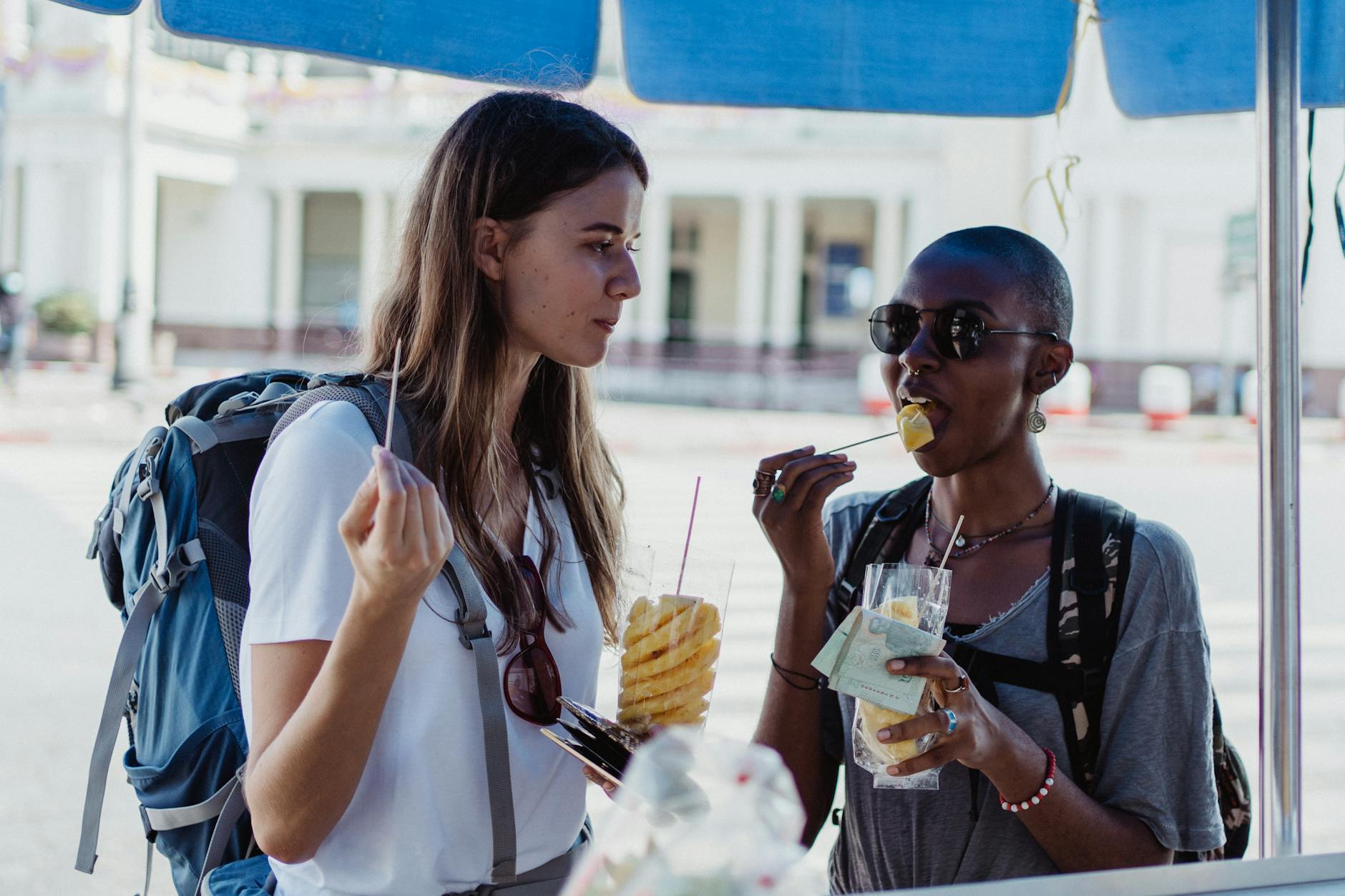
But there’s a second reason that matters more to me. The stall is where you actually meet a place. You sit on a plastic stool, someone hands you a bowl you didn’t order, and you learn how a city eats at 7 a.m. Restaurants are curated for you. Stalls are not. They’re the real thing, warts and all. I’ve had conversations over a shared table that lasted longer than some of the friendships I’ve made in hostels, and none of them started with a menu. They started with someone pointing at my bowl and laughing at how badly I was holding my chopsticks.
The risk is real, though. I’m not going to pretend it isn’t. I’ve been sick in Guatemala, in Egypt, and once — memorably — on a night bus in Laos. Every time, it cost me a day or two and some dignity. So the goal isn’t to be fearless. It’s to be smart about where you take your chances. Fear keeps you eating baguettes. Stupidity puts you in a hostel bathroom for 30 hours. The sweet spot is somewhere in the middle, and it’s wider than you think.
Top 5 Tips
1. Follow the locals, but watch what they order. A busy stall is a good sign, but a busy stall full of tourists is not the same as a busy stall full of people who live on that street. Look for a queue of office workers at lunch, construction crews at 6 a.m., or families at dinner. Then watch what the regulars are eating. If everyone’s ordering the same one dish, order that dish. It’s fresh, it’s what the cook does best, and it’s turning over fast. A stall with 40 items on the board and nobody in line is telling you something. Listen to it.
2. Watch the cooking, not the plate. High heat kills a lot. A wok screaming at 400 degrees is your friend. I look for food cooked to order in front of me — grilled skewers, noodle soups ladled from a rolling boil, anything that hits the flame after I order it. Pre-plated food sitting under a lamp at ambient temperature is where trouble lives. Same with cut fruit that’s been sitting out all afternoon. Ask yourself: was this hot five minutes ago, or has it been waiting for me since noon?
3. Drink the water — but be smart about it. This is where people get weird. I drink tap water in about 40 countries and bottled in the rest, and I’ve stopped treating it as a moral question. In most of Southeast Asia and Latin America, I buy filtered water for drinking but happily eat ice in busy stalls (the ice is usually made from filtered water and the stall sells too much of it to risk a bad batch). In places where I’m unsure, I ask for no ice and drink bottled. The cost of a case of water is a few dollars. The cost of a bad day is a bus ticket you can’t use.
4. Carry your own hygiene kit and use it before you eat. I keep a tiny bottle of hand sanitizer and a pack of wet wipes in my day bag. I use them before every meal, every time, even when I feel silly doing it. Chopsticks and spoons at a stall get wiped on a cloth that’s seen a lot of life. That’s fine — but my hands are the part I control. This one habit has probably saved me more stomach trouble than any food choice I’ve made. It’s boring advice. Boring advice is the kind that works.
5. Build a tolerance slowly and don’t panic. Your gut adapts. It just needs time. I spend my first few days in a new country eating cooked, hot, simple food — rice, grilled meat, broth — and I save the raw salads and the weird fermented stuff for week two. I also carry oral rehydration salts and a basic anti-diarrheal, because being prepared is different from being scared. If something goes wrong, you deal with it and move on. It’s rarely the catastrophe your imagination promises.

Budget Breakdown
Here’s what street food actually costs on my routes, in US dollars, because that’s how I track my spending. These are real averages from the last few years, not brochure prices.
- Vietnam: a bowl of pho or bun cha runs 30,000–50,000 dong, about $1.20–$2.00. Grilled skewers are often $0.50–$1 each. A full street dinner with a drink is usually under $4.
- Thailand: pad thai or khao soi from a cart is 50–80 baht, roughly $1.50–$2.30. A plate of grilled chicken and sticky rice is about $2.50. I eat well on $6–$8 a day.
- Mexico: three tacos al pastor from a busy stand cost 45–60 pesos, about $2.50–$3.50. A torta or a bowl of pozole is $3–$5. Street breakfast of tamales and atole is under $2.
- India: a plate of chaat or a couple of samosas is 30–60 rupees, well under a dollar. A full thali at a busy local place is $1.50–$3. Street chai is 10–20 rupees.
- Morocco: a bowl of harira and bread is 10–15 dirham, about $1–$1.50. Grilled sardines from a market stall are $2–$3. A full street meal rarely tops $5.
Compare that to a sit-down tourist restaurant in any of those places, where a single main is $8–$15 before drinks. Street food cuts my food budget by 60 to 70 percent and tastes better. The savings fund the rest of the trip — the extra week, the train upgrade, the museum I didn’t plan for. I’ve stretched a two-week trip into three on the difference alone, and the food was the best part of both versions.
One counter-intuitive thing I’ve learned: the cheapest stalls are often the safest. A grandmother selling one dish from one pot has her entire reputation and livelihood riding on that pot. A mid-range tourist restaurant with a big menu and a laminated photo book has more places for something to go wrong and less reason to care if you get sick. I trust the one-pot stall over the “international cuisine” place every time.
One Mistake to Avoid
My worst street food decision wasn’t a sketchy stall. It was a fancy one. I was in a mid-size city in Guatemala, feeling smug about my street-food instincts, and I ate a plate of ceviche from a restaurant with white tablecloths and a TripAdvisor sticker on the door. Raw fish, lime, room temperature, mid-afternoon. I spent the next 30 hours in a hostel bathroom, missing a volcano hike I’d paid $40 for.
The lesson wasn’t “avoid ceviche.” It was that I’d stopped paying attention because the setting felt safe. I hadn’t watched the fish come out of a cooler. I hadn’t asked how long it had been sitting. I traded my rules for a tablecloth. The stall cooks I trust are the ones who show you the whole process — the cooler, the flame, the fresh batch. Comfort is not the same as safety. Sometimes it’s the opposite.
Closing Inspiration
You can spend your whole trip eating safe, bland, expensive food and come home with nothing to talk about. Or you can sit on a plastic stool at 7 a.m. in a city you can’t pronounce, point at what the person next to you is eating, and find out what the place actually tastes like. The stall is the cheapest ticket to the real country, and the risk is smaller than your fear makes it. So here’s my question for you: what’s the one dish you’ve been too nervous to try? Go find the busiest stall that sells it, watch the cook for two minutes, and order it. Then tell me how it went.