The smell of charred lemongrass hit me before I saw the stall. 6am in Hanoi’s Old Quarter. A woman squatting on a plastic stool, grilling pork skewers over a tiny charcoal brazier on the pavement. She charged me 15,000 dong — about 60 cents — for three skewers, a baguette, and a handful of herbs. I ate standing up, hunched over like everyone else. That breakfast cost less than a bottle of water back home. It’s still one of the best meals I’ve had in 67 countries. Cheap food isn’t a compromise. It’s often the whole point of going somewhere.
Paris taught me that the hard way in 2016. Broke and hungry, I walked past a gleaming bistro with €28 steak frites and ended up with a sad supermarket sandwich on a bench near Canal Saint-Martin. A local guy nearby pointed me toward a North African bakery two streets over. Ten minutes later I was eating a merguez sandwich with harissa for €4.50 that made the bistro look like a tourist trap. I’d wasted an afternoon being scared of prices instead of asking someone. Now I always ask. The best cheap eats in any city are almost never on the main drag — they’re where the people who live there actually queue.
Why This Matters
Food is usually the biggest leak in a travel budget. I’ve tracked my spending across every trip since 2015, and on average I spend about 22% of my daily budget on eating. When I eat where locals eat, that number drops to around 12% — and the food gets better. Not a coincidence. Tourist-zone restaurants pay rent for the view, not the cooking. A stall with one dish and a line of office workers has to be good every single day or it closes.

Here’s the counter-intuitive part: I think splurging on one nice meal is usually a waste of money for budget travellers. I know that sounds harsh. But I’ve had €80 tasting menus that blurred together with the next one, and I can still taste a €2 bowl of bun cha in Hanoi with total clarity. Spend your money on volume and variety instead. Ten cheap meals teach you more about a place than one expensive dinner ever will.
There’s a practical angle too. Cheap eats get you out of the tourist bubble. You sit next to nurses on lunch break, students cramming for exams, taxi drivers arguing about football. That’s the stuff you actually remember.
Top 5 Tips
1. Follow the lunch crowd, not the guidebooks. Between 11:30am and 1pm, walk until you find a cluster of people in work clothes queueing at a counter or a window. That’s your spot. In Mexico City I found a taquería in Colonia Doctores this way — three tacos al pastor for 45 pesos (about $2.30), and the guy next to me in a security uniform told me it had been there for 30 years. Guidebooks don’t know about it because nobody’s paying them to.
2. Eat your big meal at lunch. Nearly every city on earth discounts its food at midday. In Lisbon, the same grilled fish that costs €18 at dinner is €8 at lunch — same kitchen, same portion. In Tokyo, set lunches (teishoku) at business-district restaurants routinely run ¥800–1,000 (about $5–7) for rice, miso, pickles, and a main. I plan my day around a big lunch and keep dinner light — fruit from a market, a pastry, whatever’s cheap.
3. Learn five food words in the local language. Not phrases. Words. “Cheap,” “today,” “menu,” “vegetarian,” “recommend.” Point at what the person ahead of you is eating and say the word for “this.” I’ve gotten incredible meals in places with no English menu just by pointing and smiling. In Tbilisi, a woman at a bakery counter handed me a khachapuri straight from the oven because I pointed at hers and said “es” — this. Cost me 2 lari, maybe 75 cents.
4. Hit the markets late. Street markets discount hard in the final hour. In Bangkok’s Khlong Toei market, vendors start cutting prices on cooked food around 5pm so they don’t have to pack it up. I’ve bought whole roast chicken legs for 30 baht (under $1) and containers of curry for 40 baht. Same in Marrakesh, same in Oaxaca. Show up hungry at 5:30pm and see what happens.
5. Carry your own water and a fork. Sounds trivial. It isn’t. Buying water three times a day at $2 a pop is $6 daily — $180 a month. A refillable bottle and a filter saved me hundreds over the years. And a small spork in my bag means I can say yes to that plastic bag of noodles or that market fruit without hunting for cutlery. Small habits, big savings.
Budget Breakdown
These are real prices from my last big trip — a six-week run through Southeast Asia and southern Europe in 2023. All in USD, all for a full meal, not a snack.
- Hanoi, Vietnam: Bun cha or pho from a pavement stall — $1.20 to $2.00. A banh mi — 80 cents. I averaged $6 a day on food there.
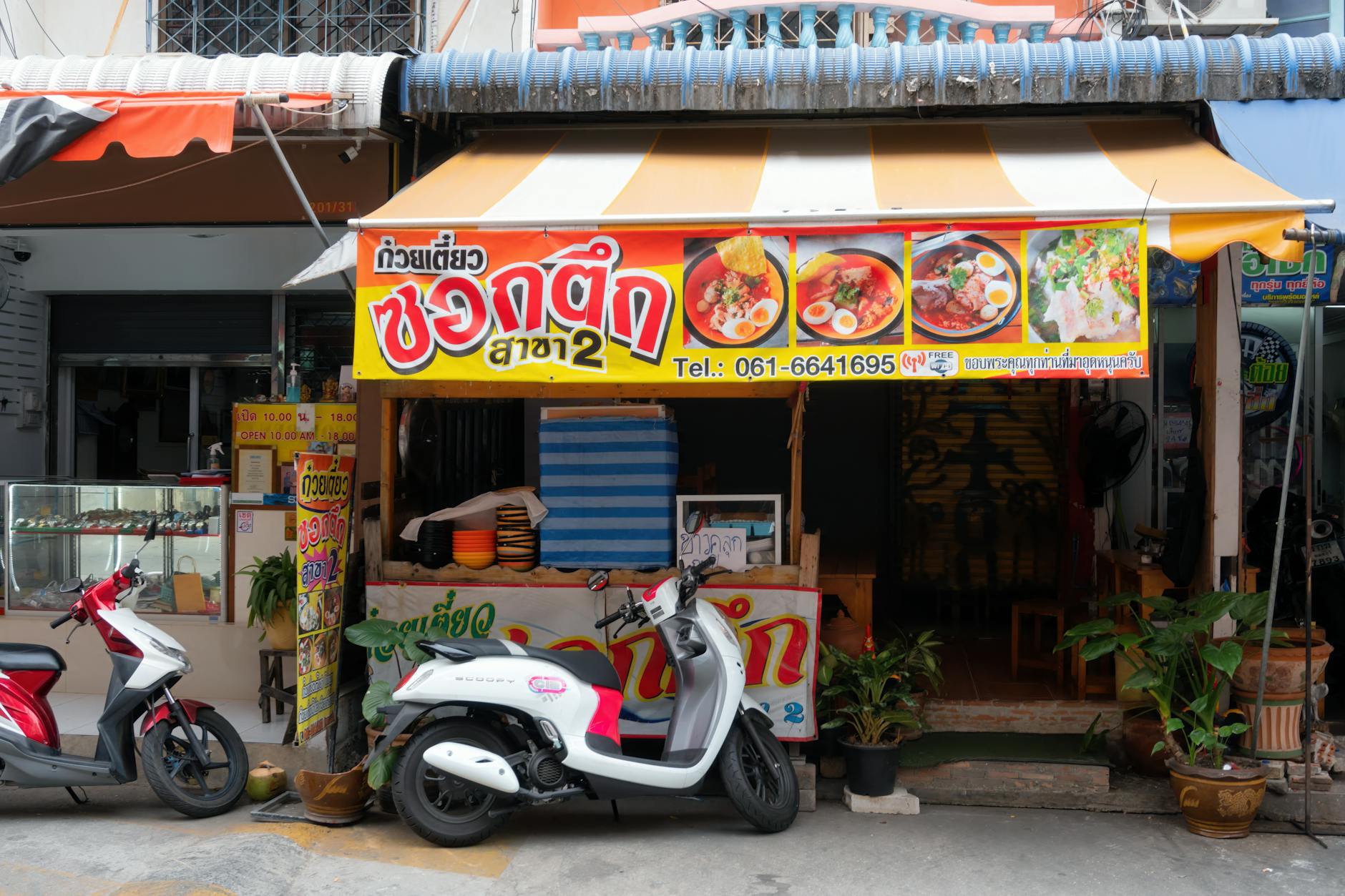
- Bangkok, Thailand: Pad kra pao from a street cart — 60 baht, about $1.70. Boat noodles — 50 baht. Market fruit — $1 for a bag.
- Mexico City: Tacos al pastor — 15–20 pesos each (70 cents to $1). A full set lunch (comida corrida) — 90 pesos, about $5. Best value meal on the planet, in my opinion.
- Lisbon, Portugal: Bifana sandwich — €3.50. Grilled sardines at a tasca — €6. A lunch special with wine — €9.
- Tbilisi, Georgia: Khachapuri — 4 lari (about $1.50). A full plate of khinkali dumplings — 8 lari. Georgian food is criminally underpriced.
- Tokyo, Japan: The outlier. A conbini onigiri is ¥150 (about $1), but sit-down cheap eats run ¥800–1,200. Still doable — just budget $15–20 a day rather than $8.
Add it up and my daily food spend across the whole trip averaged $11.40. In Tokyo alone it was $18. The point isn’t a magic number — it’s that eating cheap is a skill you build, and the prices above are all findable if you follow the tips.
One Mistake to Avoid
I once got food poisoning in Varanasi from a lassi I bought because the stall looked “clean and touristy.” That’s the mistake — assuming hygiene is about how polished a place looks. The grimy stall with a line of locals and constant turnover is usually safer than the empty restaurant with laminated menus. High turnover means fresh food. A busy kitchen is a working kitchen.
My rule now: if a place is busy, I eat there. If it’s empty and the food’s been sitting in a tray, I walk. I also carry oral rehydration salts and don’t drink tap water where I shouldn’t, which has kept me out of trouble for years. One bad night in a cheap guesthouse taught me more about food safety than any blog ever did.
So here’s my question for you: when was the last time you ate somewhere because a local was eating there, and not because a review told you to?
Go find the stall with the plastic stools and the handwritten sign. Order what the person ahead of you ordered. Pay with coins, eat standing up, and let the city feed you for less than the price of a coffee back home. That’s where the good stuff lives — not behind a maître d’, but behind a charcoal brazier at six in the morning. Pack light, carry a spork, and follow your nose.